Commercial Pool Maintenance: Essential Guide for Property Managers
Discover the fundamentals of commercial pool maintenance — from water chemistry and filtration to compliance and hiring the right pool service professionals.
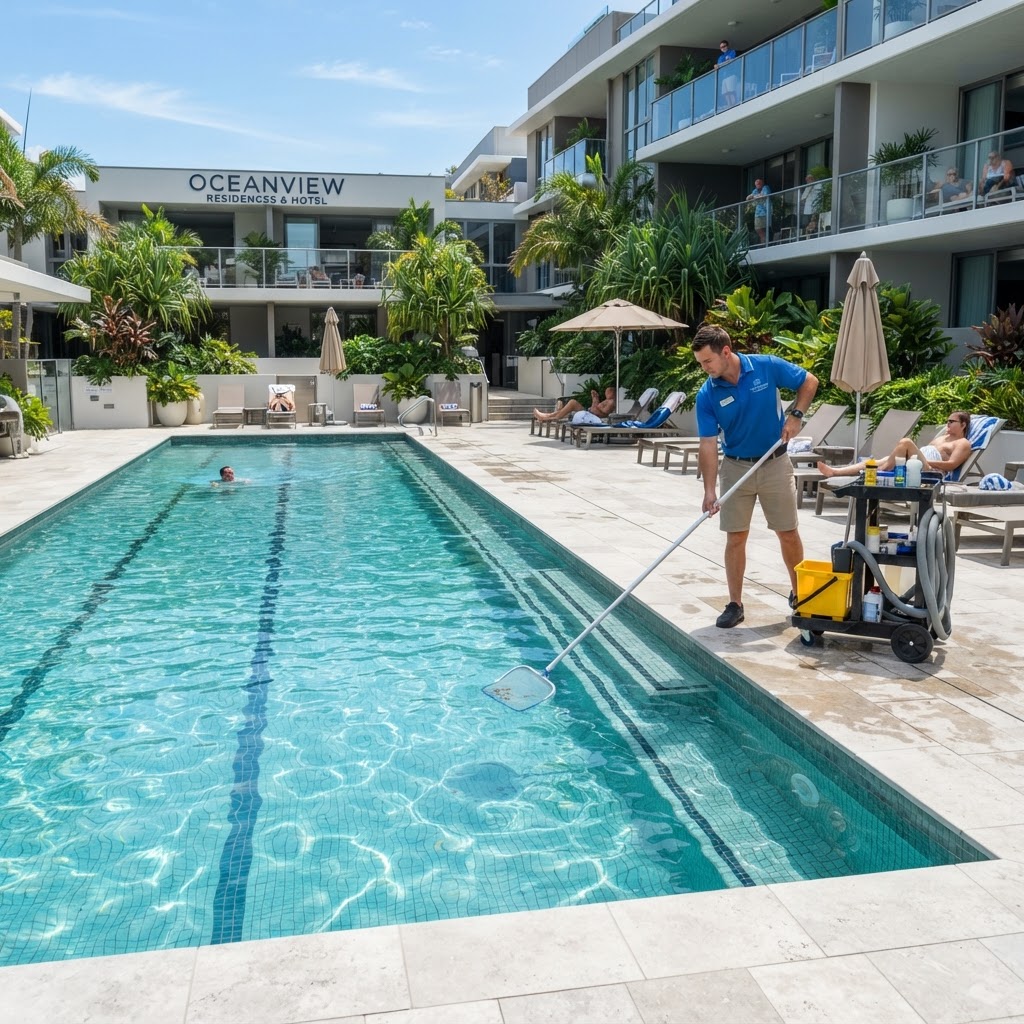
Why Commercial Pool Maintenance Matters
Whether it's a hotel rooftop pool, an apartment community amenity, a fitness center, or a municipal aquatic facility, a commercial swimming pool is a significant investment — and a major liability if not properly maintained. Poor water quality, equipment failures, and non-compliant safety features can lead to health code violations, guest complaints, and even pool closures.
Professional commercial pool maintenance ensures your pool remains safe, clean, and inviting year-round. This guide covers the essentials every facility manager and property owner should understand, and shows you where to find qualified pool service professionals in your region.
The Core Components of Pool Maintenance
1. Water Chemistry Management
Balanced water chemistry is the foundation of a safe and appealing pool. The key parameters include:
- pH level — Ideal range is 7.2–7.8. Low pH causes corrosion and eye irritation; high pH reduces chlorine effectiveness and causes scaling.
- Free chlorine — The primary sanitizer. Maintained at 1–3 ppm for most commercial pools, with higher levels for heavy-use facilities.
- Total alkalinity — Acts as a pH buffer. Target 80–120 ppm to prevent rapid pH swings.
- Calcium hardness — Too low causes corrosion; too high causes cloudy water and scale. Ideal range is 200–400 ppm.
- Cyanuric acid (stabilizer) — Protects chlorine from UV degradation in outdoor pools. Keep below 50 ppm in commercial settings.
Commercial pools require daily — sometimes multiple times per day — water testing. Most health departments mandate that test results be logged and available for inspection.
2. Filtration and Circulation
The pool's pump and filter system is its circulatory system. Proper turnover rate (the time it takes to circulate all the water through the filter) is regulated by code — typically 6 hours or less for commercial pools. Key maintenance tasks include:
- Backwashing sand and DE filters when pressure gauges indicate a 10 psi rise above clean baseline.
- Cleaning cartridge filter elements on a regular schedule.
- Inspecting pump strainer baskets and skimmer baskets daily.
- Checking for air leaks, unusual noises, or vibration in pump motors.
3. Cleaning and Surface Care
Daily physical cleaning prevents algae growth and keeps the pool visually appealing:
- Skimming the surface for leaves, insects, and debris.
- Brushing pool walls and floor to prevent algae and calcium buildup.
- Vacuuming — manual or automatic — to remove settled debris.
- Tile cleaning to remove calcium deposits at the waterline.
- Emptying skimmer and pump baskets to maintain flow.
4. Equipment Inspection
Commercial pool equipment — pumps, heaters, chlorinators, controllers, and lighting — should be inspected regularly by a trained technician. Early detection of issues like worn pump seals, corroded heat exchangers, or failing chlorination cells prevents costly breakdowns and downtime during peak season.
Health and Safety Compliance
Commercial pools are subject to local and state health department regulations. Compliance requirements typically include:
- Proper fencing and barrier codes.
- Required safety equipment (life rings, shepherd's crooks, depth markers).
- Anti-entrapment drain covers compliant with the Virginia Graeme Baker Pool & Spa Safety Act.
- Posted occupancy limits and emergency procedures.
- Regular health department inspections and permits.
- Proper chemical storage and handling.
Non-compliance can result in fines, mandatory closures, and liability exposure. A professional pool service company stays current on code requirements and keeps your facility inspection-ready.
In-House vs. Professional Pool Service
Some facilities maintain pools with in-house staff, but commercial pools generally require the expertise of licensed pool service professionals. Consider outsourcing when:
- Your pool serves the public or a large resident population.
- Local regulations require a Certified Pool Operator (CPO) on staff.
- You lack specialized equipment for repairs, electrical work, or plumbing.
- You want predictable budgeting through a service contract.
A reputable pool service company will offer tiered service plans — from weekly chemical and cleaning visits to full-service maintenance including equipment repair and seasonal openings/closings.
Seasonal Considerations
In regions with cold winters, pools require proper closing procedures: lowering water levels, winterizing plumbing lines, adding winter chemicals, and installing safety covers. Spring openings involve removing covers, rebalancing water chemistry, inspecting equipment, and performing any needed repairs. In year-round climates, maintenance is continuous, but seasonal changes in bather load, temperature, and sunlight affect chemical demand.
Finding the Right Pool Maintenance Provider
When selecting a commercial pool service company, look for:
- CPO certification — Certified Pool Operators have completed nationally recognized training.
- Commercial experience — Hotel, HOA, or municipal pool references.
- Proper licensing — Pool service contractors may need specialty licenses depending on your state.
- Service agreement clarity — A written contract detailing visit frequency, scope, and chemical costs.
- Response time — Emergency availability for equipment failures during peak season.
Browse commercial pool maintenance providers in our directory, or explore all facility services available in your area.
Key Takeaways
- Water chemistry, filtration, and physical cleaning are the three pillars of commercial pool maintenance.
- Health code compliance is non-negotiable — violations can close your pool and create liability.
- Professional CPO-certified service providers bring expertise, reliability, and regulatory knowledge.
- Preventive maintenance and seasonal care protect your investment and extend equipment life.
Looking for a trusted pool service partner? Find commercial pool maintenance professionals near you, or list your pool service business to connect with property managers who need your expertise.
Maintenance Checklist
Track and complete each task. Download a printable copy for your facility maintenance records.
Routine Inspection
Preventive Maintenance
Documentation
Frequently Asked Questions
Common questions from facility managers and building owners.
Find Facility service providers in Your State
Browse our directory of verified facility service providers across all 50 states. Each state page includes provider listings, typical maintenance costs, industry insights, and a hiring checklist.