Commercial HVAC Preventative Maintenance: Seasonal Checklist & Cost Guide
A practical seasonal HVAC maintenance checklist for commercial buildings — covering spring, summer, fall, and winter tasks, plus 2026 cost benchmarks for service contracts and common repairs.
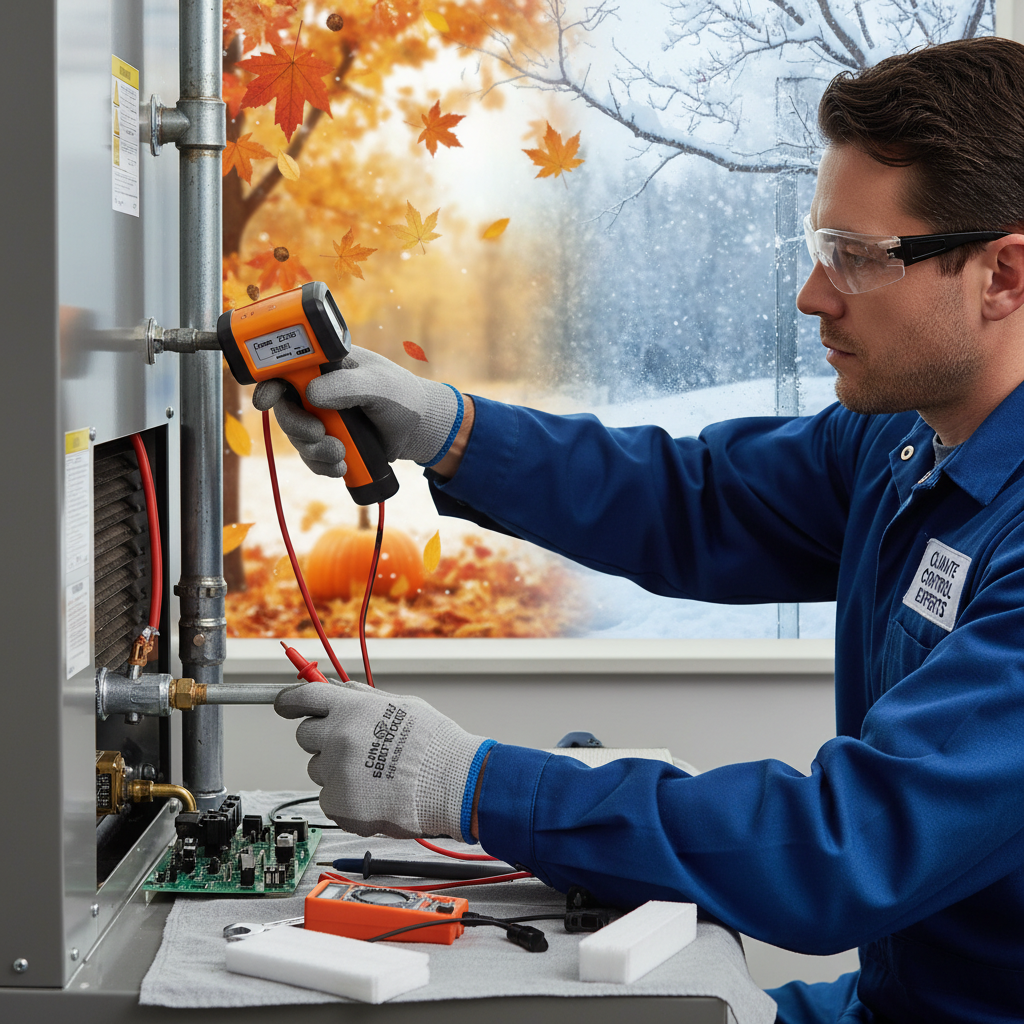
Commercial HVAC Preventative Maintenance: Seasonal Checklist & Cost Guide
HVAC systems represent 30–40% of total energy consumption in a typical commercial building and the largest single category of maintenance spending. Yet most HVAC failures are preventable — the vast majority of commercial HVAC breakdowns are caused by deferred maintenance: clogged filters, dirty coils, low refrigerant, worn belts, and neglected drain pans.
This guide provides a complete seasonal maintenance checklist for commercial HVAC systems, explains what each task accomplishes, and gives 2026 cost benchmarks for service contracts and common repairs.
Why Seasonal HVAC Maintenance Matters
- Prevents peak-season failures: HVAC units fail when they're working hardest — the hottest day in July or the coldest night in January. Seasonal prep eliminates the failure modes that cause breakdowns under load
- Reduces energy costs: A dirty condenser coil can reduce system efficiency by 15–20%, directly increasing energy bills
- Extends equipment life: Commercial HVAC equipment with documented PM programs lasts 15–20 years vs. 10–12 years without
- Preserves warranties: Most manufacturer warranties require documented maintenance — skipping PM can void warranty coverage on major components
- Maintains indoor air quality: Clean filters and coils are the primary defense against poor IAQ, which affects occupant health and productivity
Spring Startup Checklist (Cooling Season Prep — March/April)
Spring is the most important HVAC maintenance window. Units that sit idle all winter need thorough inspection before cooling season demand arrives.
Cooling System Components
- ☐ Inspect and clean condenser coils — remove debris, check fin condition, straighten bent fins
- ☐ Check refrigerant charge levels — verify operating pressures match manufacturer specs
- ☐ Inspect refrigerant lines for leaks — visual and electronic leak detection
- ☐ Test compressor operation — check amperage draw against nameplate rating
- ☐ Inspect and clean evaporator coils
- ☐ Clean and treat condensate drain pans — algae tabs to prevent biological growth
- ☐ Flush and test condensate drain lines — ensure free flow, no blockages
- ☐ Check economizer operation and damper actuators
- ☐ Test cooling controls and thermostat calibration
- ☐ Run unit through full cooling cycle — verify supply air temperatures
Air Handling and Distribution
- ☐ Replace all air filters — use manufacturer-recommended MERV rating
- ☐ Inspect all belt-driven equipment — check belt tension and wear, replace if cracked
- ☐ Lubricate motor bearings per manufacturer requirements
- ☐ Check fan blade condition and set screws
- ☐ Inspect ductwork for obvious damage, disconnections, or pest intrusion
- ☐ Test variable air volume (VAV) box operation if applicable
- ☐ Verify supply and return air balancing
Electrical and Controls
- ☐ Inspect all electrical connections — tighten loose terminals
- ☐ Check capacitors — start and run capacitors are a common failure point
- ☐ Test contactors and relays — look for pitting or burning
- ☐ Verify control sequences and programming in building automation system (BAS)
- ☐ Test all safety cutouts — high-pressure, low-pressure, freeze stats
Summer Maintenance Checklist (In-Season — June/July/August)
- ☐ Monthly filter inspection — replace if loaded above 50%
- ☐ Condensate drain pan check — especially in humid climates (monthly)
- ☐ Monitor energy consumption — unexpected spikes indicate efficiency problems
- ☐ Check refrigerant pressures on high-run-time units
- ☐ Inspect rooftop units after severe weather events (hail, high winds)
- ☐ Verify supply air temperatures during peak cooling load periods
- ☐ Clean condenser coil again mid-season in dusty or polluted environments
Fall Startup Checklist (Heating Season Prep — September/October)
Heating System Components
- ☐ Inspect heat exchanger — cracks allow combustion gases into occupied spaces (carbon monoxide hazard)
- ☐ Test gas valve operation and check for leaks — use combustible gas detector
- ☐ Check burner operation — verify ignition, flame pattern, and combustion efficiency
- ☐ Inspect flue and venting for blockages, corrosion, or disconnections
- ☐ Test safety controls — high-temperature limit, pressure relief, roll-out switch
- ☐ Run unit through full heating cycle — verify supply air temperatures
- ☐ Check boiler systems (if applicable) — water treatment, pressure, relief valves, expansion tank
Controls and Building Automation
- ☐ Switch BAS from cooling to heating mode — verify setpoints and schedules
- ☐ Test night setback and weekend scheduling
- ☐ Verify freeze protection controls are active
- ☐ Replace filters before heating season begins
Winter Maintenance Checklist (Cold Weather Protection — December/January)
- ☐ Monitor freeze protection on rooftop units — inspect heat tape on condensate lines
- ☐ Check economizer lockout settings — prevent cold air introduction below 35°F
- ☐ Inspect unit covers and wind baffles on outdoor equipment
- ☐ Monitor heating system performance — verify supply air temperatures during cold snaps
- ☐ Maintain monthly filter schedule — heating season filter loading is often higher due to increased occupancy
- ☐ Test carbon monoxide detectors near gas-fired equipment
Year-Round Monthly Tasks
- ☐ Inspect and replace air filters on schedule
- ☐ Check condensate drain pans for standing water
- ☐ Visual inspection of all rooftop units — look for obvious damage or unusual conditions
- ☐ Review building automation system alarms and fault codes
- ☐ Log utility consumption for trend analysis
HVAC Service Contract Cost Benchmarks (2026)
Preventative Maintenance Contracts (Annual)
- Small rooftop unit (2–5 ton), 2 visits/year: $300 – $500/unit
- Medium rooftop unit (5–25 ton), 2 visits/year: $500 – $900/unit
- Large rooftop unit (25–50 ton), 2 visits/year: $900 – $1,800/unit
- Air handler unit (AHU), 2 visits/year: $600 – $1,500/unit
- Chiller (50–200 ton), annual PM: $2,000 – $8,000
- Cooling tower, annual PM: $1,500 – $4,000
- Boiler, annual PM: $800 – $3,000
Common Repair Cost Benchmarks
- Capacitor replacement: $150 – $400
- Contactor replacement: $200 – $500
- Refrigerant recharge (per lb, R-410A): $75 – $150
- Refrigerant recharge (per lb, R-22 legacy): $200 – $600
- Condenser fan motor replacement: $400 – $900
- Compressor replacement (5-ton unit): $1,500 – $3,500
- Heat exchanger replacement: $1,500 – $4,000
- Controls board replacement: $600 – $2,000
- Duct cleaning (per linear foot): $25 – $50
When to Repair vs. Replace
Use the 50% rule as a guideline: if a repair costs more than 50% of the replacement unit cost AND the unit is past 60% of its expected service life, replacement typically delivers better ROI than repair. Additional factors favoring replacement:
- Unit uses R-22 refrigerant (phased out — recharge costs are prohibitive)
- Multiple component failures in a single season
- Unit is 15+ years old with no documented maintenance history
- Replacement unit qualifies for utility rebates (often $200–$2,000 for high-efficiency commercial equipment)
Selecting an HVAC Service Contractor
Minimum qualifications to verify:
- EPA Section 608 certification for refrigerant handling (required by law)
- State HVAC contractor's license (requirements vary by state)
- Manufacturer authorization or certification for your equipment brand
- General liability insurance ($1M minimum) and workers' compensation
- 24/7 emergency dispatch capability with documented response time SLAs
- References from comparable commercial accounts
Maintenance Checklist
Track and complete each task. Download a printable copy for your facility maintenance records.
Routine Inspection
Preventive Maintenance
Documentation
HVAC Services Providers
Verified companies specializing in hvac services services
Frequently Asked Questions
Common questions from facility managers and building owners.
Find Facility service providers in Your State
Browse our directory of verified facility service providers across all 50 states. Each state page includes provider listings, typical maintenance costs, industry insights, and a hiring checklist.