Commercial Duct Cleaning: A Complete Guide for Facility Managers
Learn why commercial duct cleaning is essential for indoor air quality, energy efficiency, and occupant health — plus how to find qualified HVAC contractors for your facility.
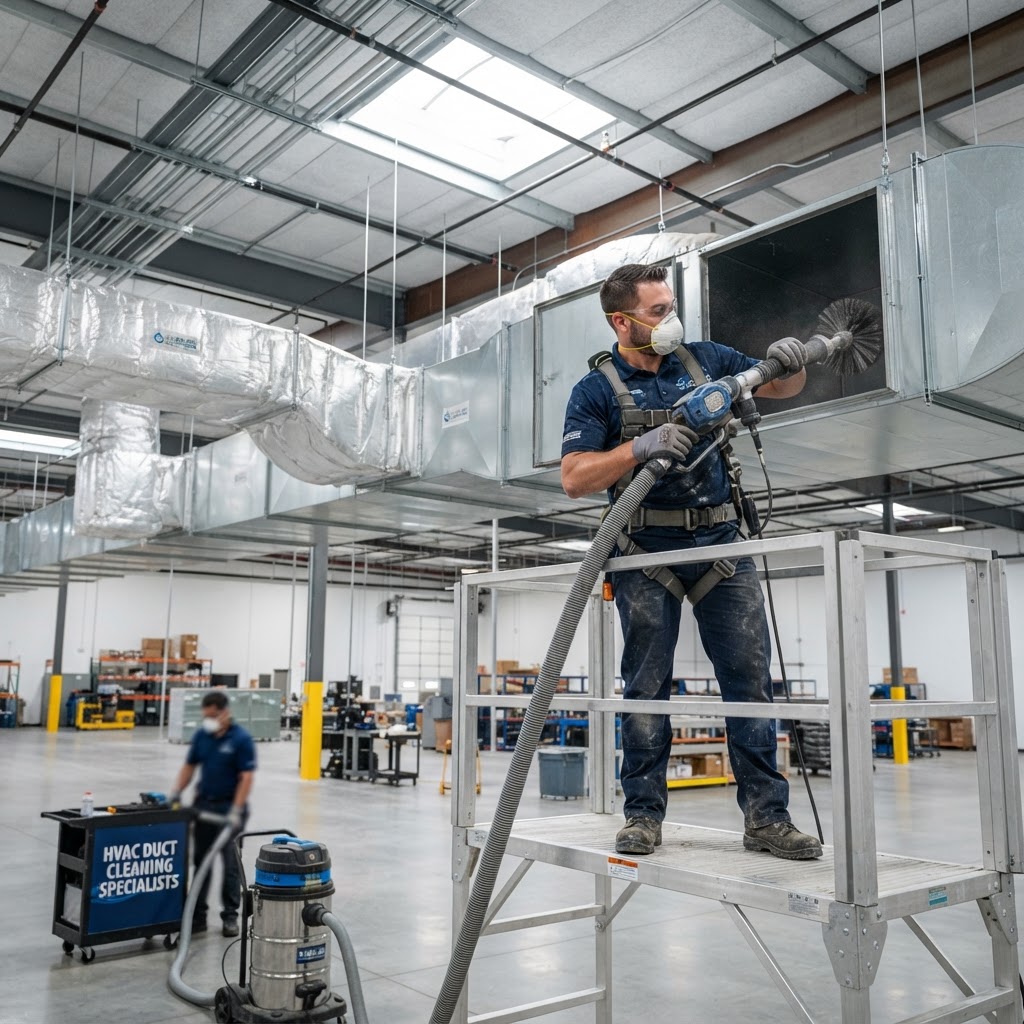
What Is Commercial Duct Cleaning?
Commercial duct cleaning is the process of removing dust, debris, allergens, mold, and other contaminants from the HVAC ductwork system in commercial buildings. Unlike residential duct cleaning, commercial systems involve significantly larger duct networks, more complex airflow designs, and stricter compliance requirements.
For facility managers and property owners, maintaining clean ductwork is not just about air quality — it directly impacts energy costs, equipment longevity, and occupant comfort. The HVAC service providers in our directory specialize in commercial duct cleaning for offices, hospitals, schools, warehouses, and retail spaces.
Why Commercial Duct Cleaning Matters
1. Indoor Air Quality (IAQ)
The EPA ranks indoor air pollution among the top five environmental health risks. Over time, dust, pollen, pet dander, mold spores, and bacteria accumulate inside ductwork. Every time the HVAC system cycles on, these contaminants are distributed throughout the building. For facilities with sensitive occupants — such as healthcare clinics, daycares, or senior living centers — poor IAQ can lead to respiratory issues, allergic reactions, and increased absenteeism.
2. Energy Efficiency
When duct interiors are coated with debris, airflow is restricted. The HVAC system must work harder to maintain set temperatures, which increases energy consumption and utility bills. The National Air Duct Cleaners Association (NADCA) reports that even a thin buildup of 0.42 inches of dust on a cooling coil can reduce efficiency by up to 21%. Regular duct cleaning helps restore optimal airflow and can yield significant energy savings.
3. Equipment Lifespan
A clean system runs cooler and experiences less strain on motors, fans, and compressors. By removing particulate buildup, you reduce wear and tear on critical HVAC components, extending the life of your equipment and delaying costly capital replacements.
4. Odor and Mold Control
Musty smells in a building are often traced to biological growth inside ductwork or near the coil. Professional duct cleaning, combined with antimicrobial treatments, eliminates the source of odors rather than masking them.
When Should You Clean Your Commercial Ducts?
NADCA recommends inspecting commercial ductwork annually and cleaning as needed. However, certain situations call for immediate attention:
- After construction or renovation — drywall dust, insulation fibers, and sawdust inevitably enter the duct system.
- After a flood or water intrusion event — moisture inside ductwork creates an ideal environment for mold.
- Visible mold growth inside ducts or on HVAC components.
- Vermin infestation — rodents or insects nesting in ductwork leave droppings and debris.
- Excessive dust visible at supply registers or settling on surfaces shortly after cleaning.
- After tenant turnover in multi-tenant buildings where prior occupants may have contributed to contamination.
The Commercial Duct Cleaning Process
A reputable commercial duct cleaning contractor follows a structured process:
- System Inspection — Using inspection cameras or borescopes, the technician assesses the condition of the ductwork, identifies contamination levels, and documents problem areas.
- Preparation — Supply and return registers are sealed or opened as needed, and drop cloths protect the workspace.
- Containment — The system is placed under negative pressure using a powerful HEPA-filtered vacuum to ensure dislodged debris flows toward the collection unit, not into occupied spaces.
- Agitation and Removal — Technicians use rotating brushes, compressed air whips, and skipper balls to dislodge debris from duct walls. The debris is then drawn to the vacuum.
- Component Cleaning — Coils, drain pans, blower assemblies, and filters are cleaned or replaced as needed.
- Sanitization — If mold or bacteria are present, an EPA-registered antimicrobial treatment may be applied.
- Post-Cleaning Inspection — A final visual or camera inspection confirms the system is clean.
How to Choose a Commercial Duct Cleaning Contractor
Not all duct cleaning companies are equipped for commercial work. When evaluating providers, look for:
- NADCA certification — The National Air Duct Cleaners Association sets the industry standard. Certified Air Systems Cleaning Specialists (ASCS) have demonstrated expertise.
- Commercial experience — Ask for references from similar facilities (office, healthcare, industrial, etc.).
- Proper equipment — Commercial jobs require truck-mounted or large portable HEPA vacuums, not the small rotary brush systems used in homes.
- Documentation — A professional contractor provides before/after photos and a written scope of work.
- Insurance and bonding — Verify general liability and workers' compensation coverage.
You can find vetted commercial duct cleaning professionals in our HVAC services directory, or browse all facility service providers by category and location.
Cost of Commercial Duct Cleaning
Pricing varies widely based on building size, duct accessibility, contamination level, and geographic location. While residential cleanings are often priced per vent, commercial projects are typically quoted as a lump sum after a site visit. Expect to invest more for larger facilities with complex duct layouts — but the return on investment through energy savings, reduced maintenance, and healthier occupants is well documented.
Always request itemized quotes from multiple providers and be wary of prices that seem too good to be true. Low-cost operators often lack the equipment or training to properly clean commercial systems.
Key Takeaways
- Commercial duct cleaning improves indoor air quality, energy efficiency, and equipment lifespan.
- Have ductwork inspected annually and cleaned after construction, water damage, or visible contamination.
- Choose NADCA-certified contractors with proven commercial experience.
- Investing in professional cleaning pays for itself through lower energy bills and fewer occupant complaints.
Ready to connect with a qualified provider? Browse HVAC and duct cleaning contractors in your area, or list your duct cleaning business in our directory to reach facility managers actively seeking your services.
Maintenance Checklist
Track and complete each task. Download a printable copy for your facility maintenance records.
Monthly Tasks
Quarterly Tasks
Semi-Annual Tasks
Annual Tasks
HVAC Services Providers
Verified companies specializing in hvac services
Frequently Asked Questions
Common questions from facility managers and building owners.
Find HVAC contractors in Your State
Browse our directory of verified HVAC contractors across all 50 states. Each state page includes provider listings, typical maintenance costs, industry insights, and a hiring checklist.